What Happens to a Bank's Security Liability If Guard Response Is Delayed During an Alarm?
Key Takeaways
- A delayed guard response during an alarm does not automatically create legal liability for a bank, but it can become a factor if the delay is later tied to a documented loss or injury.
- Bank security liability generally depends on whether the bank and its security provider met a reasonable standard of care, not simply on how fast the response happened to be.
- Bank alarm response procedures are usually defined in a written contract or service agreement, and these documents often matter more in a liability review than general industry assumptions.
- A delayed security guard response can result from several factors, including monitoring center processing time, guard availability, and physical distance from the branch.
- Business owners managing a branch or similar facility in Amarillo, TX should understand their specific contract terms rather than assume a standard response time applies universally.
Table of Contents
- How Liability Is Typically Assessed After a Delayed Response
- What Bank Alarm Response Procedures Usually Include
- Common Causes of Delayed Security Guard Response
- Who Can Be Involved When a Delay Becomes a Dispute
- Common Misunderstandings About Response Time and Liability
- What Typical Online Advice Overlooks
- Risks and Limitations Business Owners Should Understand
- A Realistic Scenario: An Alarm Delay at an Amarillo Branch
- Conclusion
- Frequently Asked Questions
Introduction
A delayed guard response during a bank alarm does not automatically make the bank liable for a resulting loss, but it can become a central issue if the delay is later connected to damages, theft, or injury that a reasonable response time might have prevented. Liability in these situations usually comes down to whether the bank and its bank security provider followed a documented, reasonable standard of care, rather than simply how many minutes passed before someone arrived. This distinction matters for business owners responsible for a branch or similar facility, since assumptions about response time can differ significantly from what a contract or court actually examines. The sections below explain how these situations are generally evaluated, what alarm response procedures typically cover, and what factors commonly contribute to a delay.
How Liability Is Typically Assessed After a Delayed Response
Courts and insurers generally look at whether the response fell within a "reasonable" standard rather than comparing it to an ideal or fastest-possible time. This standard is often shaped by industry norms, the specific contract between the bank and its security provider, and local conditions at the time of the incident.
A delay alone rarely establishes liability on its own. What usually matters more is whether the delay directly contributed to a loss that a timely response would have reasonably prevented, and whether the response fell outside what the contract or industry standard called for.
The Role of Contracts and Service Agreements
Security service agreements typically spell out expected response parameters, monitoring procedures, and escalation steps. When a dispute arises, these documents are often reviewed closely to determine whether the actual response matched what was promised or implied.
What Bank Alarm Response Procedures Usually Include
Bank alarm response procedures generally involve several linked steps rather than a single action.
- Alarm activation, triggered either by a silent alarm, a panic button, or an automated system detecting unusual activity
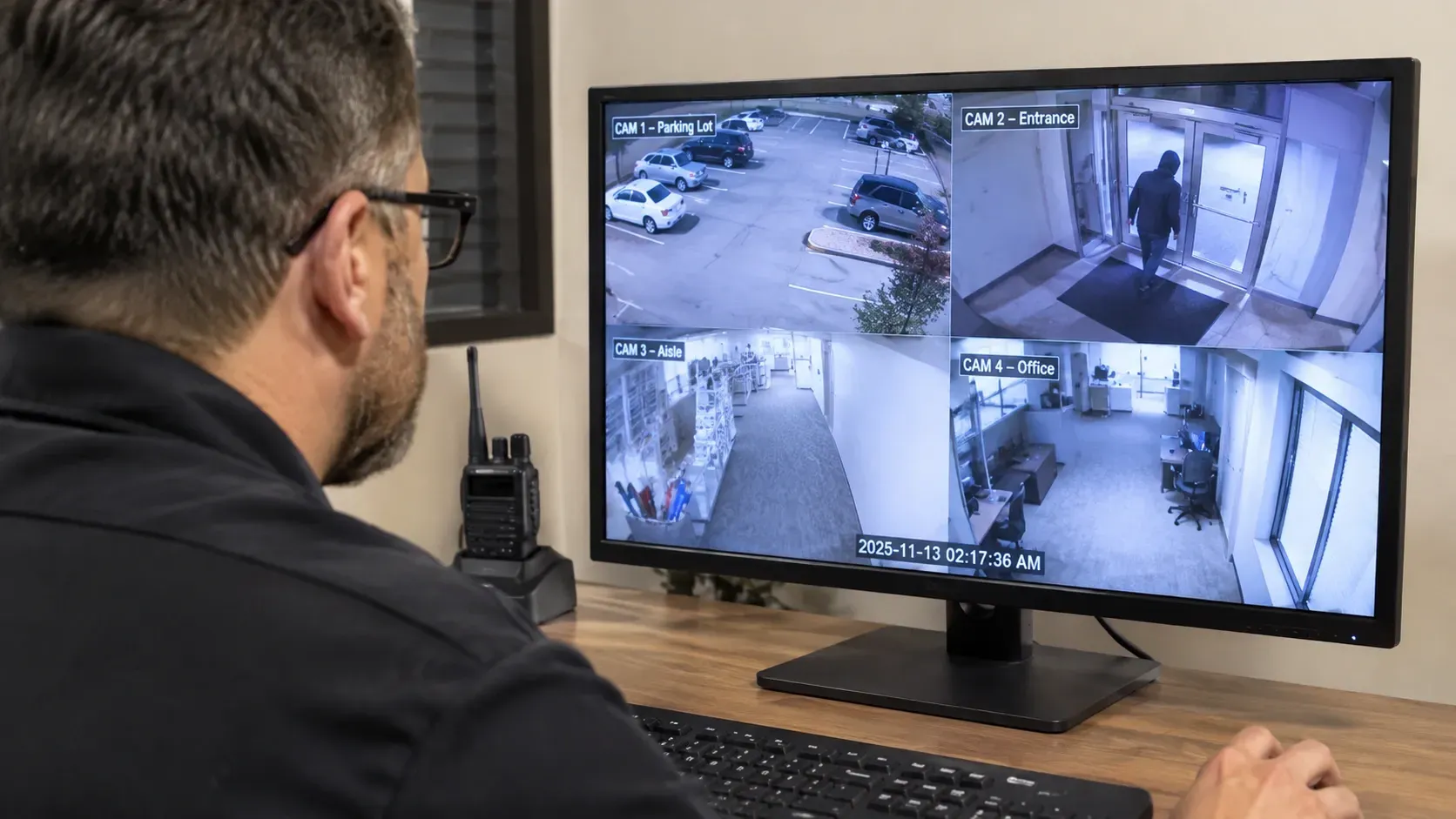
- Monitoring center verification, where an alarm and video monitoring service reviews the alert before dispatching a response, partly to filter out false alarms
- Dispatch to guard or law enforcement, depending on the specific arrangement the bank has in place
- On-site assessment, once a guard or officer arrives and determines the nature of the situation
- Documentation and reporting, which creates a record used later for insurance, compliance, or legal review if needed
Each of these steps takes some amount of time, and the overall response time reflects the sum of all of them rather than a single dispatch-to-arrival number.
Common Causes of Delayed Security Guard Response
Monitoring Center Processing Time
Verification steps exist to reduce false alarm dispatches, but they also add time before a guard is actually notified. This step varies depending on the monitoring provider's specific procedures.
Guard Proximity and Availability
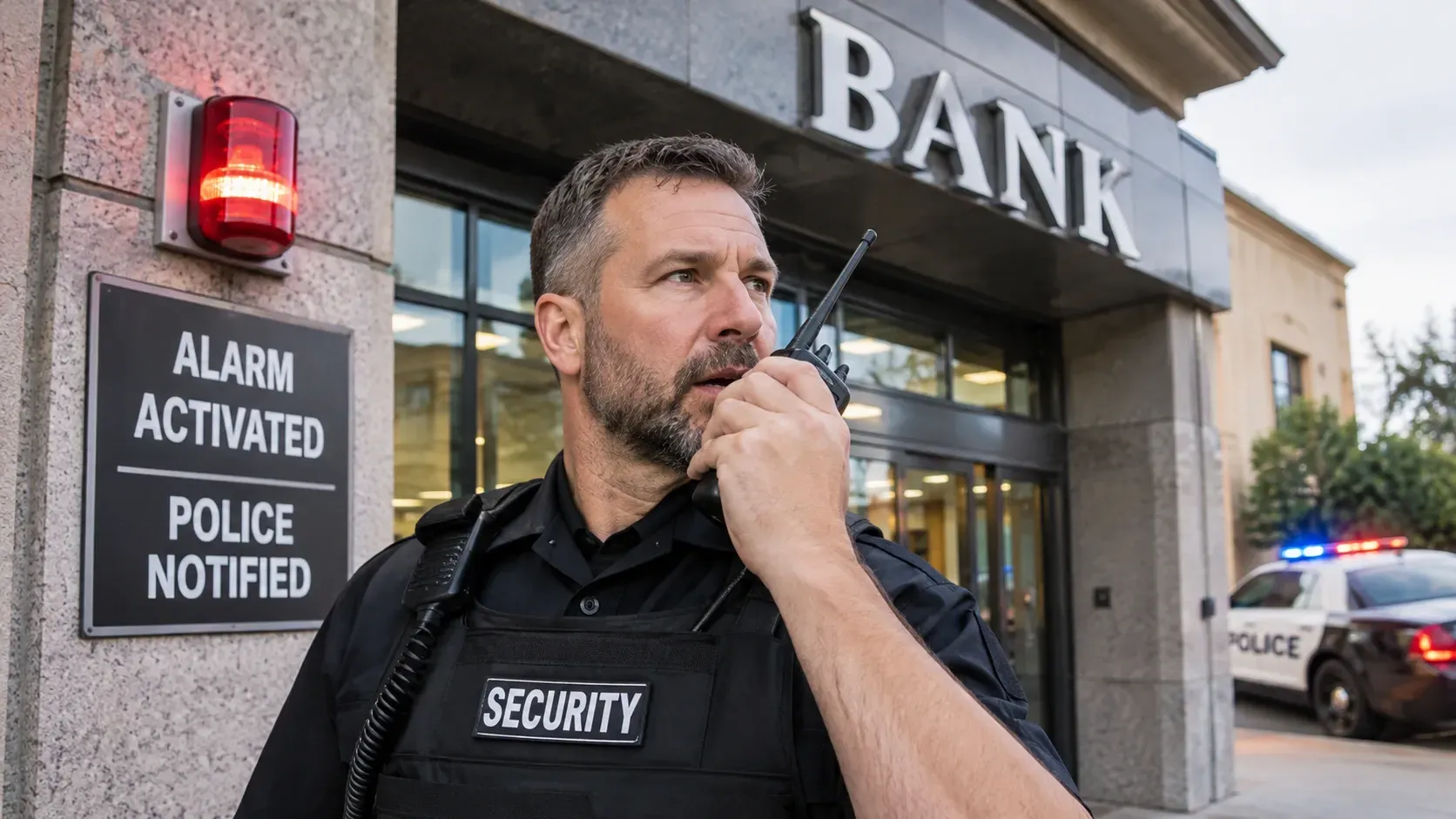
A delayed security guard response can result from the assigned guard being farther from the branch than expected, already responding to another call, or covering multiple locations within a patrol route.
Local Traffic and Physical Access
Road conditions, time of day, and physical barriers to the branch entrance can all add time to an otherwise prompt dispatch, particularly in situations involving multiple branch locations across a wider service area.
Who Can Be Involved When a Delay Becomes a Dispute
When a delayed response is connected to a financial loss or injury, several parties often become involved in reviewing what happened.
The bank itself typically reviews internal records and its contract with the security provider. The security company reviews its own dispatch logs and guard activity records. Insurance carriers for both parties often review the incident to determine coverage and potential fault. In some cases, law enforcement records from the same incident are also referenced, particularly if a police response was involved alongside the guard response.
Common Misunderstandings About Response Time and Liability
Common belief: Any delay longer than a few minutes automatically creates liability for the bank or its security provider. What is actually true: Liability generally depends on whether the response met a reasonable standard defined by contract and industry norms, not on a fixed number of minutes. Why the distinction matters: Business owners sometimes assume a specific response time guarantee exists when the actual contract language may use more general terms like "prompt" or "reasonable."
Common belief: The security company is always solely responsible for a delayed response. What is actually true: Responsibility can be shared between the monitoring provider, the guard company, and sometimes the bank itself, depending on where in the process the delay occurred. Why the distinction matters: Understanding this helps business owners know where to direct questions when reviewing an incident.
Common belief: A fast response guarantees no liability exposure at all. What is actually true: Even a prompt response does not eliminate liability if other aspects of the security plan, such as inadequate monitoring equipment or insufficient staffing, are found lacking. Why the distinction matters: Response time is one factor among several that gets reviewed, not the only one.
What Typical Online Advice Overlooks
General articles about bank security liability often focus narrowly on response time without addressing how that time is actually evaluated in practice.
Contract language specifics. Many general guides do not emphasize how much the exact wording of a service agreement matters, since "reasonable response" and a specific guaranteed time are treated very differently in a liability review.
Documentation quality. How well a monitoring center and guard company document their actions during an incident often matters as much as the actual time elapsed, since gaps in documentation can complicate any later review.
Multiple contributing factors. A delay is rarely caused by one single issue. Monitoring verification, guard availability, and physical access often combine, and addressing only one factor may not meaningfully reduce overall response time.
Insurance coordination. How a business owner's insurance policy interacts with the security provider's own liability coverage is frequently left out of general discussions, even though this interaction often shapes how a claim gets resolved.
Risks and Limitations Business Owners Should Understand
This topic involves contract law and insurance considerations that vary by specific agreement and jurisdiction, so general information cannot substitute for a direct review of your own contract and policy terms.
The outcome of any specific incident can depend heavily on the exact language used in the security service agreement, the documentation available from the incident itself, and how local courts or insurers have handled similar situations in the past.
A business owner concerned about this exposure may want to review their current contract's response time language directly with their provider, since assumptions about "industry standard" timing can vary and may not match what is actually written into the agreement.
A Realistic Scenario: An Alarm Delay at an Amarillo Branch
This is a hypothetical example used to illustrate how these situations are typically evaluated, not an account of an actual incident.
A branch manager in Amarillo, TX experiences an alarm trigger during after-hours, and the assigned guard arrives roughly eighteen minutes after the initial alert, a gap the manager considers too long. In reviewing the incident, the branch's leadership pulls the monitoring center's verification log and the guard company's dispatch record to understand where the time actually went.
The review finds that monitoring verification took about four minutes, dispatch notification took another two, and the guard's patrol travel time accounted for the remaining twelve minutes due to being assigned to a wider route covering several nearby properties. The branch's service agreement specified a "prompt, reasonable response" without a fixed time guarantee, which becomes the standard used to evaluate whether the response was adequate.
This kind of breakdown, looking at each stage of the process rather than only the final arrival time, is generally how these situations get reviewed before any liability conclusion is reached.
Conclusion
A delayed guard response during a bank alarm does not automatically create liability, but it can become a significant factor when connected to a documented loss. Liability reviews generally focus on whether the response met a reasonable standard defined by contract language and industry norms, with attention paid to each stage of the alarm response process rather than just the final arrival time. Delays can stem from monitoring verification, guard availability, or physical access issues, often in combination. Business owners responsible for a branch or similar facility benefit from understanding their own contract's specific language rather than relying on general assumptions about standard response times.
Questions About Bank Alarm Response in Amarillo?
If you manage a branch or similar facility and want to better understand how your current alarm response procedures are structured, it can help to review the details directly with your provider. You can
reach out with questions
about your specific monitoring and response setup. This is offered as general guidance, not a guarantee of any particular outcome.
Frequently Asked Questions
Does a delayed guard response always mean the security company is at fault?
Not necessarily. Fault depends on whether the response met the standard defined in the service agreement and whether the delay directly contributed to a documented loss.
What is considered a "reasonable" response time for a bank alarm?
This varies by contract and location, since many agreements use general language like "prompt" rather than a specific guaranteed number of minutes.
Can insurance cover a loss connected to a delayed security response?
This depends on the specific insurance policy and how it defines covered events, so reviewing the policy language directly with an insurer is the most reliable way to know.
How can a business owner find out what response time their contract actually guarantees?
Reviewing the written service agreement directly, rather than relying on general industry assumptions, is the most accurate way to understand specific response commitments.
Are monitoring center delays treated differently than guard travel delays in a liability review?
Often yes, since each stage of the process may be documented separately and can be evaluated individually when determining where a delay originated.