Is Recorded CCTV Footage Actually Security, or Just Evidence After a Break-In Already Happened?
Key Takeaways
- Recorded CCTV footage mainly documents an event after it happens. On its own, it does not physically stop a break-in while it is occurring.
- CCTV security monitoring, where footage is actively watched in real time, functions differently than passive recording and can support a faster response during an incident.
- Video surveillance crime prevention tends to come more from visible deterrence and the possibility of being watched than from the recording itself.
- Recorded footage still holds real value for identification, insurance claims, and police reports, even though that value arrives after the fact rather than during the event.
- Homeowners and business owners in Amarillo, TX evaluating a camera system should understand whether they are buying passive recording, active monitoring, or some combination of both.
Table of Contents
- What Recorded CCTV Footage Actually Does
- The Difference Between Recording and Monitoring
- Where Deterrence Actually Comes From
- What Recorded Footage Is Genuinely Useful For
- Common Misunderstandings About Camera Systems
- What Typical Online Advice Overlooks
- Risks and Limitations of Relying on Cameras Alone
- A Realistic Scenario: A Break-In at an Amarillo Business
- Conclusion
- Frequently Asked Questions
Introduction
Recorded CCTV footage is primarily evidence rather than active security, since a camera that only records does not do anything to stop a break-in while it is happening. It documents what occurred so the footage can be reviewed afterward, but it has no mechanism to intervene in real time on its own. This distinction matters for anyone comparing camera options against other measures, including alarm and video monitoring services that add active oversight to a recording system. The sections below explain how recording differs from monitoring, where actual deterrence comes from, and what recorded footage is genuinely useful for once an incident has already occurred.
What Recorded CCTV Footage Actually Does
A standard recording setup captures continuous or motion-triggered video and stores it locally or in the cloud for later review. Nobody is necessarily watching the feed as it happens, and the system does not send an alert or trigger a response unless additional features are added.
This means recorded footage, by itself, functions closer to a documentation tool than an active defense. It answers the question of what happened and often who was involved, but it does not change the outcome of the event as it unfolds.
Why This Gets Confused With Active Security
Camera systems are frequently marketed under broad "security system" branding, which can blur the distinction between a device that watches and records versus one that is actively monitored by a person or service capable of responding in real time.
The Difference Between Recording and Monitoring
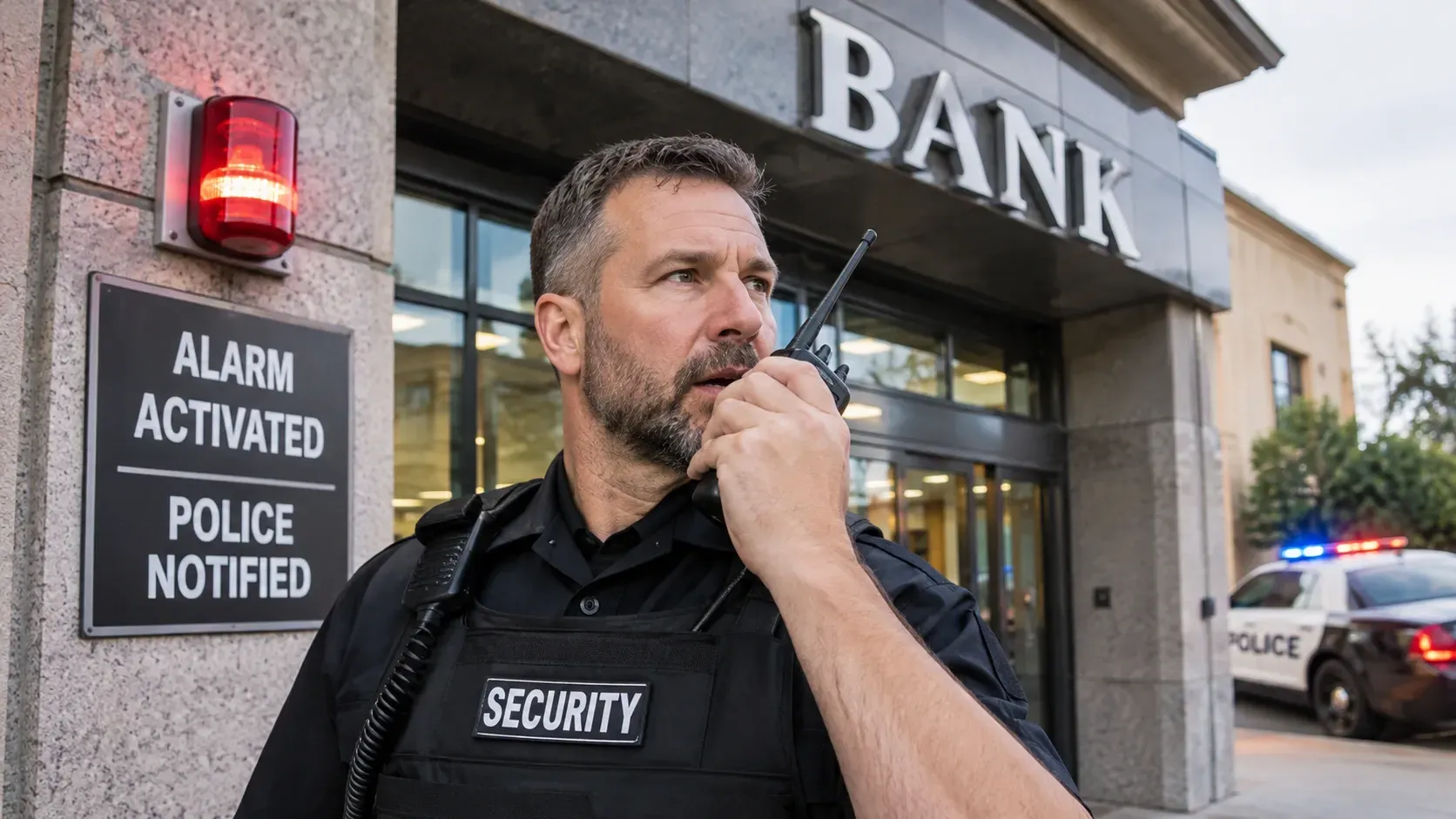
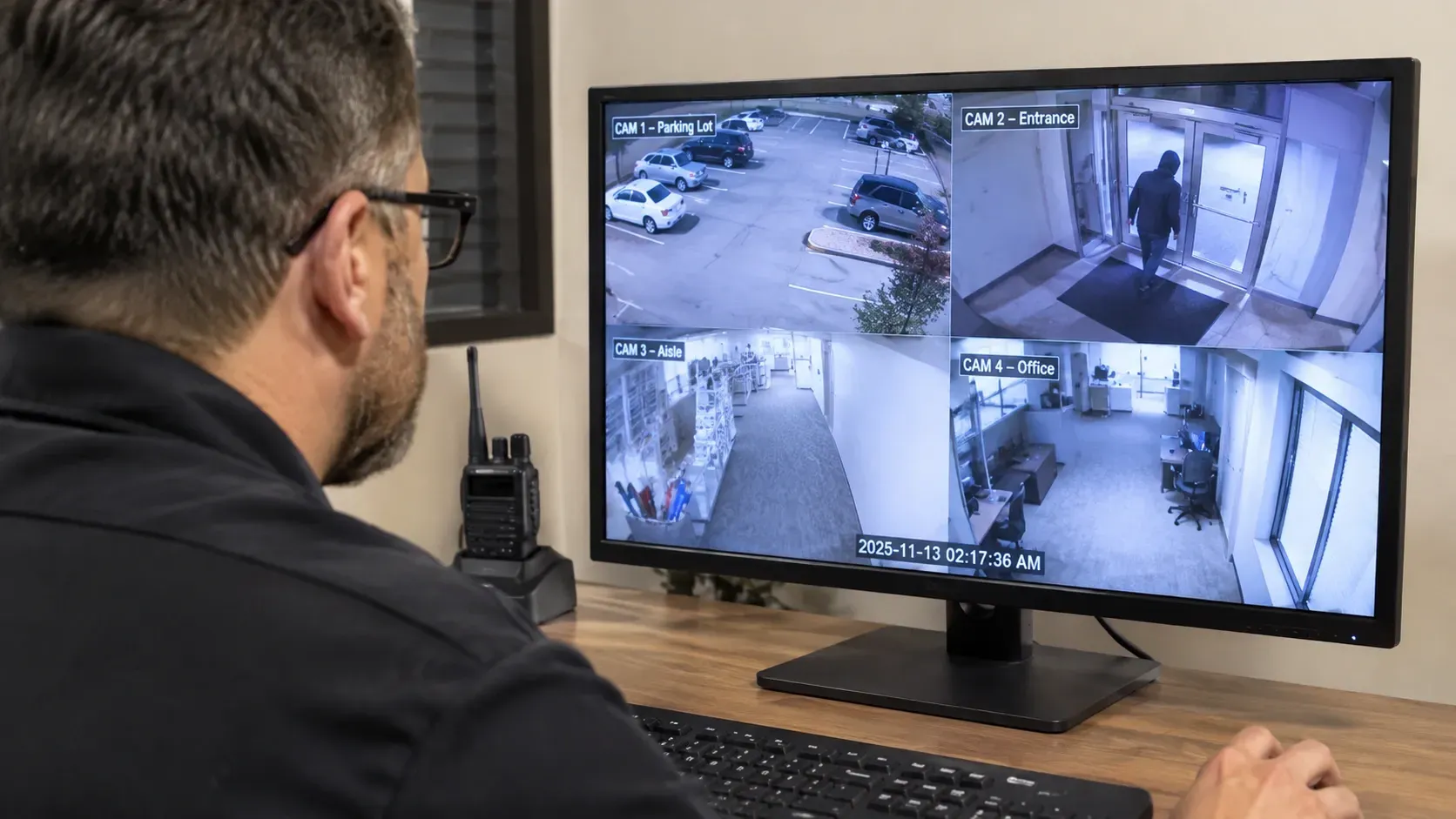
CCTV security monitoring adds a layer that passive recording does not have on its own. In a monitored setup, someone is actively watching the footage, either continuously or through automated alerts, and is positioned to respond or notify authorities while an incident is still happening.
This difference matters because the two setups solve different problems. Recording answers "what happened." Monitoring is built to answer "what is happening right now," and only the second one has any realistic chance of affecting the outcome of an active break-in.
How Monitored Systems Typically Work
Monitored systems often combine motion detection, automated alerts, and human review, where a flagged event prompts someone to check the live feed and decide whether a response, such as a call to law enforcement or an on-site patrol, is warranted.
Where Deterrence Actually Comes From
Video surveillance crime prevention generally comes from the possibility of being observed and identified, not from the recording process itself. A visible camera signals to anyone considering a break-in that their actions could be documented and later used against them.
Research summarized by the U.S. Department of Justice's Office of Community Oriented Policing Services on situational crime prevention generally supports the idea that perceived risk of detection, rather than certainty of punishment, has a meaningful effect on opportunistic crime. A visible camera contributes to that perceived risk even when no one is watching it live.
This deterrent effect depends heavily on visibility. A hidden or poorly placed camera that someone does not notice provides little to no deterrence value at the moment of the break-in, even though it may still capture useful footage afterward.
What Recorded Footage Is Genuinely Useful For
Despite not preventing an incident in progress, recorded footage still serves several practical purposes once an event has occurred.
- Identification, helping police identify a suspect through facial recognition review, clothing, or vehicle details captured on camera
- Insurance claims, providing documentation that can support a claim for stolen property or property damage
- Pattern recognition, allowing a business owner to notice if the same individual or vehicle has appeared near the property multiple times before an incident
- Legal proceedings, serving as evidence if a suspect is identified and charged
These uses matter and should not be dismissed simply because the footage could not prevent the initial incident.
Common Misunderstandings About Camera Systems
Common belief: Having visible cameras means a property is actively protected. What is actually true: Visible cameras can deter some opportunistic activity, but a passive recording system has no way to intervene once someone decides to proceed anyway. Why the distinction matters: Property owners sometimes rely on cameras alone, assuming they function similarly to a monitored alarm system or on-site security presence.
Common belief: All camera systems include someone watching the footage live. What is actually true: Many residential and small business systems are recording-only, with no active monitoring unless that service is specifically added and paid for separately. Why the distinction matters: This affects what kind of response, if any, can happen while an incident is still in progress.
Common belief: Footage quality does not matter much since the goal is just documentation. What is actually true: Low-resolution or poorly positioned cameras can produce footage too unclear for identification purposes, limiting its usefulness even after an incident. Why the distinction matters: Camera placement and quality directly affect whether recorded footage can actually support an investigation or insurance claim.
What Typical Online Advice Overlooks
General articles about home and business camera systems often promote cameras as a complete security solution without addressing their actual limitations.
The monitoring gap. Most consumer-grade camera marketing does not clearly separate passive recording from active monitoring, leaving buyers to assume more capability than the system actually provides.
Response coordination. Even a monitored system depends on who receives the alert and how quickly they can act, which varies significantly between a basic app notification and a professionally staffed monitoring center.
Combining methods. Cameras work better as part of a layered approach that may include lighting, access control, and sometimes on-site patrol presence, rather than as a standalone solution expected to cover every scenario.
Storage and retention limits. Recorded footage is sometimes overwritten after a set period, and property owners do not always realize this until they need older footage that has already been deleted.
Risks and Limitations of Relying on Cameras Alone
A camera system, whether recording only or actively monitored, cannot physically stop someone determined to break in. Its value depends heavily on visibility, placement, and whether anyone is watching or will watch the footage in time to matter.
This approach is less suitable as a standalone measure for higher-risk properties or situations involving valuable assets, where a faster, more direct response capability like on-site security guards may be worth the added cost compared to monitoring alone.
The effectiveness of deterrence can also depend on how aware local individuals are that a property has cameras at all. In some situations, a well-known reputation for camera coverage in a neighborhood or business district can matter as much as the equipment itself.
A Realistic Scenario: A Break-In at an Amarillo Business
This is a hypothetical example used to illustrate how recorded footage functions in practice, not an account of an actual incident.
A small retail business in Amarillo, TX installs a basic recording-only camera system after a prior minor theft, assuming the visible cameras will prevent further incidents. Several months later, someone breaks in after hours, and the recording captures clear footage of the individual, including a visible tattoo and the make of a getaway vehicle.
The footage proves useful for the police report and eventually helps identify a suspect, but it did nothing to stop the break-in itself, since no one was monitoring the feed in real time and the system had no way to alert anyone during the event. After the incident, the owner adds a monitored alarm component to the existing cameras, specifically to address the gap between documentation and active response.
This sequence reflects a common pattern. Recorded footage frequently proves valuable after the fact, even when it had no effect on preventing the incident from occurring in the first place.
Conclusion
Recorded CCTV footage functions primarily as documentation rather than active security. It cannot intervene in a break-in while it is happening, since a passive recording system has no mechanism to respond in real time. Deterrence value comes mainly from visibility and the perceived risk of being identified, not from the act of recording itself. Despite this limitation, recorded footage remains genuinely useful for identification, insurance claims, and legal proceedings after an incident occurs. Property owners deciding between recording-only systems and actively monitored options benefit from understanding this distinction clearly before assuming either one covers every security need.
Questions About Camera Systems for Your Amarillo Property?
If you are weighing recording-only cameras against an actively monitored system for your home or business, it can help to talk through what each option actually covers. You can
reach out with questions about which setup might fit your property and risk level. This is offered as general guidance, not a guarantee of any particular outcome.
Frequently Asked Questions
Does having cameras installed lower my insurance premiums?
This depends on the insurer and policy, so checking directly with your insurance provider is the most reliable way to know if camera installation affects your specific premium.
Can recorded footage alone identify a suspect in most cases?
This depends heavily on footage quality, lighting, and camera placement. Clear, well-positioned footage improves the odds of identification, while poor quality footage can limit it significantly.
Is a monitored camera system always better than a recording-only system?
Not necessarily for every situation. The better choice depends on budget, risk level, and how quickly a real-time response would actually matter for a specific property.
How long is recorded footage usually kept before it gets deleted?
This varies by system and storage capacity, with many consumer systems overwriting older footage after a set number of days unless storage settings are adjusted.
Do visible cameras actually reduce break-in attempts?
General research on situational crime prevention suggests visible deterrents can reduce some opportunistic activity, though this effect is not guaranteed and varies by situation.
Should I combine cameras with other security measures?
Many property owners choose a layered approach, since cameras alone address documentation but not active intervention during an incident. Security guard services and monitored alarms are common additions.