Why Do Construction Sites in Amarillo and Other Texas Metros Face the Highest Theft Risk Over Long Holiday Weekends?
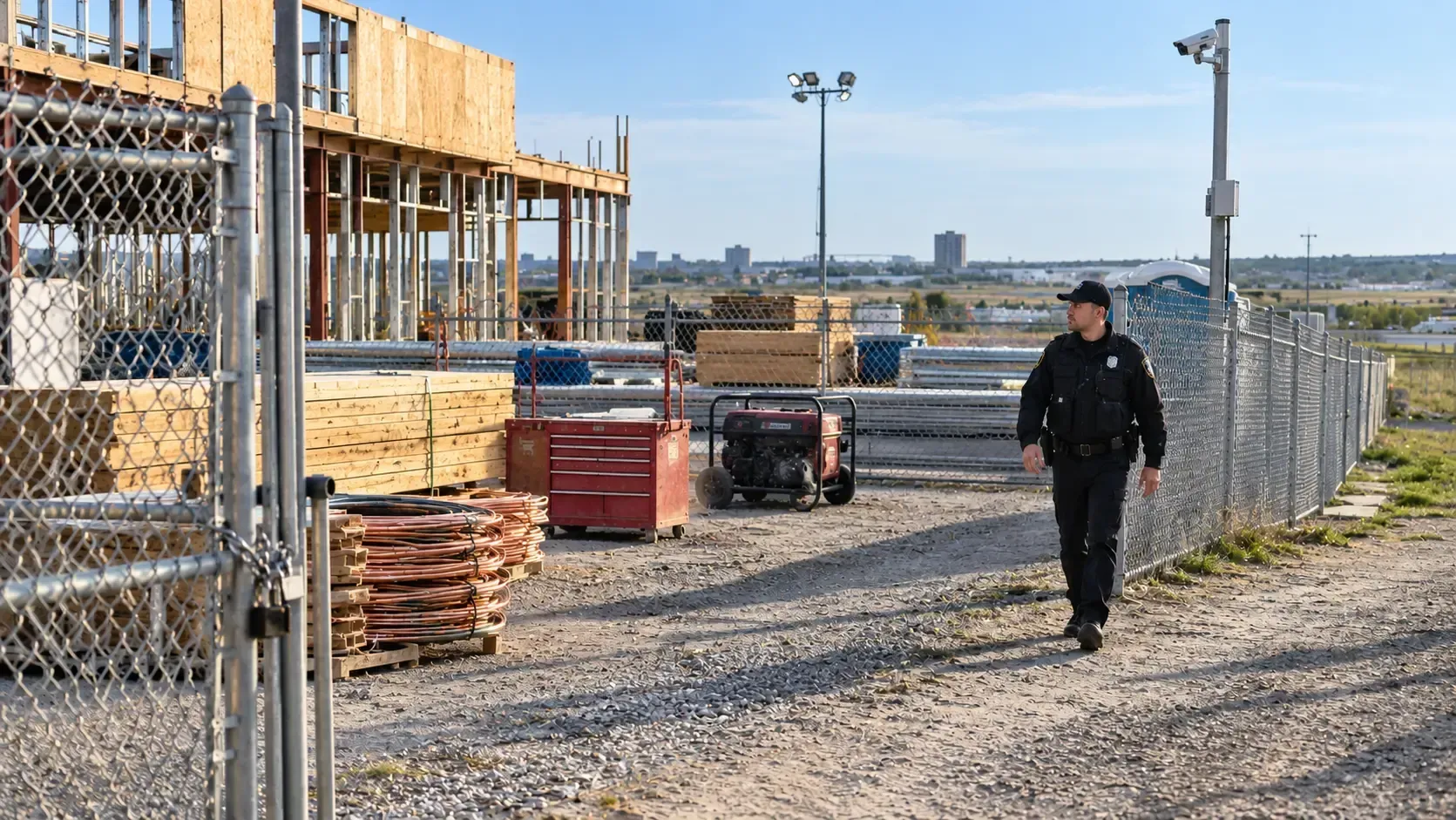
Table of Contents
- Introduction
- The Window Is the Whole Reason
- What Construction Site Theft Targets First
- Why a Fenced Site Is Not a Secured Site
- Construction Site Theft Risk Rises as a Project Progresses
- Construction Site Security That Works Over a Long Weekend
- What to Do the Week Before a Holiday
- Conclusion
- Secure Your Job Site 24/7
- Frequently Asked Questions
Key Takeaways
- A three or four day closure means a long gap before anyone notices a loss.
- Delay matters more than darkness. Nobody reports what nobody has seen yet.
- Copper, tools, fuel, and small equipment move fastest and are hardest to trace.
- Fencing and signage deter the casual. Neither stops someone who planned around the calendar.
- The week before the holiday is when the decisions get made, not the Friday afternoon.
Introduction
Construction sites face their highest theft risk over long holiday weekends because crews are away and the site sits unmonitored for several days in a row, which is why construction security coverage matters most on exactly the days nobody is scheduled to be there. The extended gap before a loss is even noticed is what makes the weekend worth planning around.
It is not that holidays attract more opportunists. It is that the consequences of being caught drop sharply when nobody will walk the site until Tuesday.
The Window Is the Whole Reason
Every theft decision weighs reward against the chance of interruption, and a long closure changes the second half of that equation.
On a normal weeknight, a site is unattended for maybe twelve hours. Someone discovers a cut fence or an empty conex in the morning, the report goes in that day, and whatever was taken is still close by. Over a four day holiday closure, that same discovery might not happen until the fourth morning.
What the extra days buy:
- More time on site without any realistic chance of being interrupted
- Multiple visits, since the first trip can be reconnaissance and the second a removal
- Larger loads, because there is time to stage and move volume
- Distance, as stolen material can be well out of the region before it is reported
- A cold trail, since investigation starts days after the fact
That third point is what turns a small loss into a schedule problem. A single overnight might cost you hand tools. A four day window can cost you a generator, a run of copper, and the week it takes to replace them.
What Construction Site Theft Targets First
The pattern is consistent, and it follows how easily something converts to cash.
| Target | Why it goes first |
|---|---|
| Copper wire and pipe | Easy to cut, easy to sell, essentially untraceable |
| Hand and power tools | Portable, valuable, immediate resale |
| Fuel | No serial numbers, no way to identify it |
| Small equipment and generators | One or two people can load it |
| Appliances and fixtures | Late stage projects carry a lot of them |
| Catalytic converters | Vehicles and equipment left on site |
| Lumber and bulk materials | Worth loading when there is time |
We guard machinery, copper, and materials during the hours when crews are gone, and copper is consistently the item that moves first when a site goes quiet. It is worth money, it takes seconds to cut, and once it is off the spool nobody can prove where it came from.
Large machinery is stolen less often than people expect. It is slow to move, traceable, and needs a transport. The things that disappear are the things that fit in a pickup.
Why a Fenced Site Is Not a Secured Site
Fencing and signage are worth having and neither is a security program.
A fence stops the casual and the accidental. It does not stop anyone who brought cutters and knows the site will be empty until Tuesday. Same with signage: a sign warns, and a warning only works on someone who believes there is a real chance of being caught.
What a fence actually provides is delay and a clear legal boundary. Both matter. Neither creates the thing that prevents loss, which is the realistic possibility that someone will turn up while a theft is in progress.
That is the gap a presence fills. A randomly timed patrol means nobody watching can know how long they have, and that uncertainty is what a fence cannot manufacture on its own. Our construction coverage runs 24/7 with patrols and monitoring, plus access control and entry supervision while work is happening.
Construction Site Theft Risk Rises as a Project Progresses
The exposure profile changes over the life of a build, and most sites are protected as though it does not.
Early on, a site holds equipment and bulk material. Mid project, it holds copper, mechanical, and electrical work in place but unfinished. Late stage, it holds appliances, fixtures, flooring, and finish materials, which is when the dollar value sitting in the building is at its highest and the structure is also easiest to enter.
So the riskiest holiday weekend is usually not the first one. It is the one that falls near the end of the project, when there is the most to take and the building has doors and windows that are installed but not yet secured the way they will be.
This also affects projects across metro areas differently. A site on a Dallas project or an Arlington build sits in denser surroundings with more passing traffic, while a site on the edge of Amarillo may have no observers at all after hours. Neither is automatically safer. They fail in different ways.
Construction Site Security That Works Over a Long Weekend
Layering beats any single measure, and the mix depends on the site.
What helps:
- On site presence during the closure, which is the only measure that creates real interruption risk
- Randomly timed patrols, so no gap is predictable
- Alarm and video monitoring where continuous coverage is warranted
- Lighting, which raises the chance of being seen and lowers the appeal
- Moving valuables off site before the closure where that is practical
- Locking material inside the structure rather than leaving it in the open
- Removing keys and disabling equipment so machines cannot be used to move other machines
That last one gets overlooked. Equipment left with keys in it becomes the tool used to load everything else.
Consolidate what you cannot remove. Material scattered across a site is material that can be taken quietly from a corner. Material stacked in one monitored location is a much harder proposition.
What to Do the Week Before a Holiday
The decisions that matter get made before the Friday, not on it.
- Schedule deliveries to land after the holiday, not before it.
- Inventory what will be on site during the closure, with serial numbers photographed.
- Move high value items off site if you can.
- Consolidate and lock down whatever stays.
- Remove keys and immobilize equipment.
- Confirm coverage for every day of the closure, including the holiday itself.
- Make sure someone is reachable if the monitoring or patrol finds something.
Point one is the most commonly missed. A delivery that arrives Thursday afternoon before a four day weekend sits unprotected for the entire closure, and it arrived that way because of a scheduling decision nobody connected to security.
Point seven matters too. Detecting a problem at 2am helps only if there is a number that gets answered. Our office is open 24/7 for that reason.
Conclusion
Holiday weekends are not riskier because of the date. They are riskier because the site sits unwatched long enough that a loss can happen, be loaded out, and travel before anyone walks the ground. The fix is not a taller fence. It is removing the certainty that nobody will show up, through presence, unpredictable patrols, and monitoring, combined with the unglamorous work of scheduling deliveries after the break and consolidating what stays. Decide it the week before. By Friday afternoon the options have narrowed to whatever you can lock.
Secure Your Job Site 24/7
If you have a project going into a long weekend, we will assess the site and recommend coverage for the days your crew is away. Flash Point Security & Protective Services provides 24/7 construction security with patrols, access control, and monitoring across Amarillo, Dallas, Fort Worth, Arlington, Austin, Houston, Lubbock, and San Antonio. We are a Texas licensed company, TXL# B31055001 and TXL# C18897201, HUBzone certified, and our office is open around the clock. Call (806) 877-2615 or
reach our office for a free quote.
Frequently Asked Questions
Why do construction sites get robbed on holiday weekends?
Because the site sits unattended for several consecutive days, which means a long gap before a loss is discovered. That delay allows multiple visits, larger loads, and distance before anything is reported, so the risk of interruption drops sharply.
What gets stolen most from construction sites?
Copper wire and pipe first, because it is quick to cut and essentially untraceable. Then hand and power tools, fuel, small equipment and generators, and on later stage projects appliances and fixtures. Large machinery is taken less often since it is slow to move and traceable.
Is a fence enough to protect a construction site?
A fence provides delay and a clear legal boundary, which matter, but it does not stop someone who brought cutters and knows the site is empty until Tuesday. What prevents loss is the realistic chance of being interrupted.
When is a construction project at highest risk?
Usually later in the build. Late stage sites hold appliances, fixtures, and finish materials, so the value inside is highest, and the structure is easier to enter than it will be once it is fully secured.
What should I do before a long weekend shutdown?
Schedule deliveries for after the holiday, inventory and photograph what stays, move high value items off site, consolidate and lock down the rest, remove keys and immobilize equipment, and confirm coverage for every day including the holiday itself.
Why Do Some Texas School Districts Combine Armed Officers With Unarmed Security Staff on One Campus?