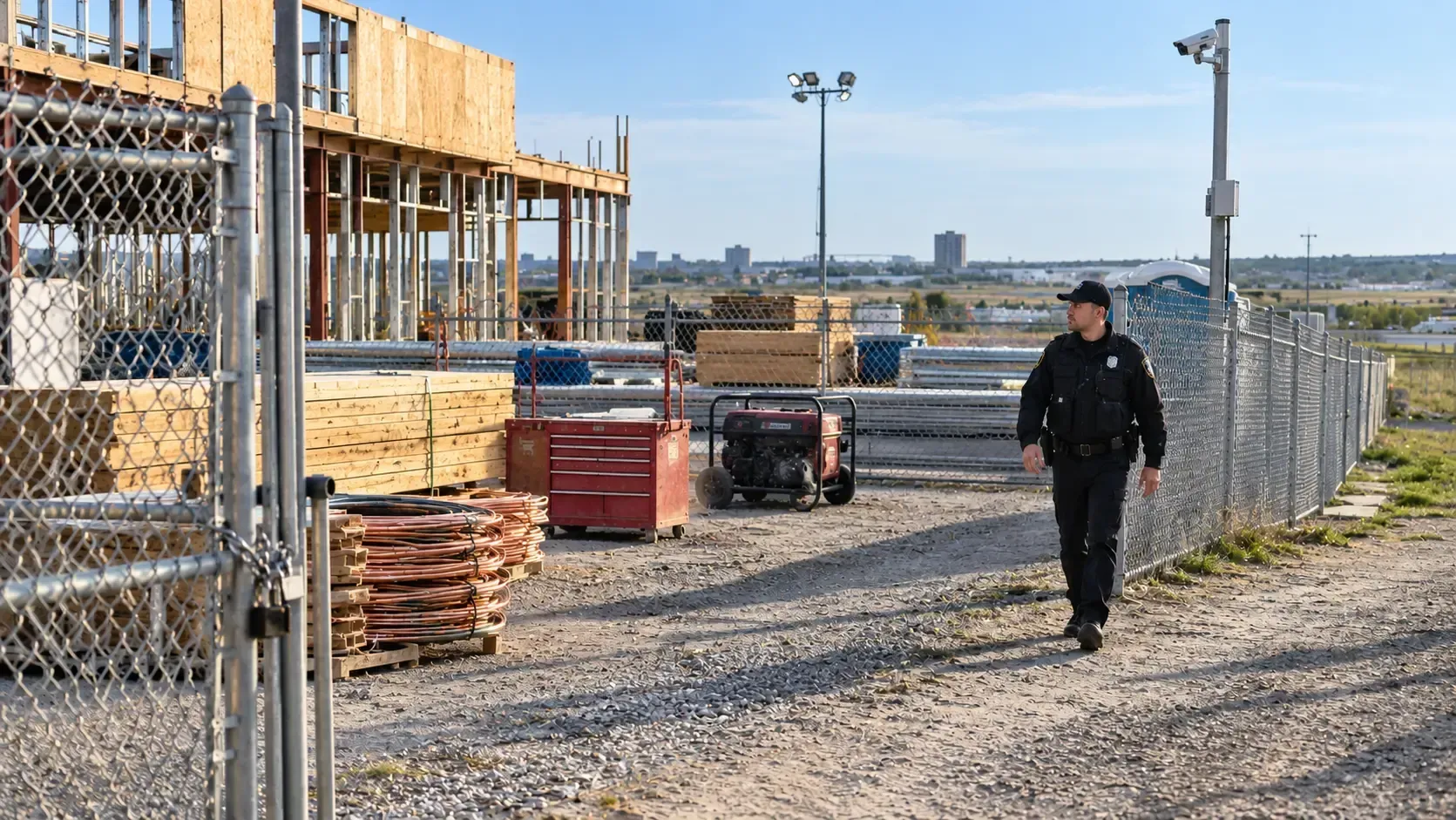
Why Do Security Guards Walk Randomly Timed Patrol Routes Instead of a Fixed Schedule?
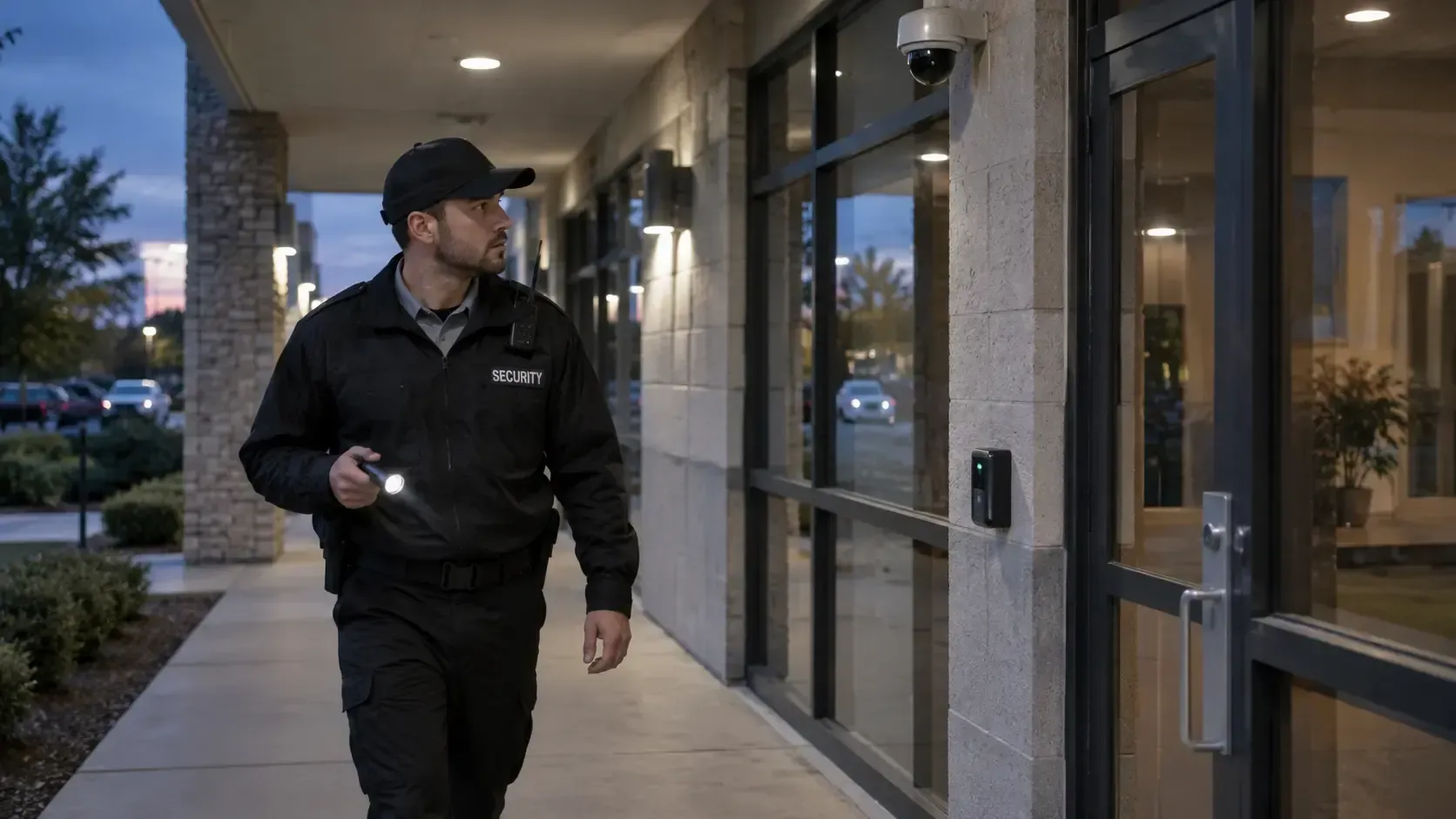
Table of Contents
- Introduction
- The Gap a Fixed Schedule Creates
- How Random Security Patrol Routes Remove the Pattern
- What Surveillance Looks Like From the Other Side
- Why Random Does Not Mean Unplanned
- How You Verify Patrols Actually Happened
- What Randomized Patrols Cannot Do Alone
- Conclusion
- Request a Patrol Security Quote
- Frequently Asked Questions
Key Takeaways
- A fixed schedule is learnable, and anyone watching a property long enough will learn it.
- Randomized timing means no observer can predict the next pass or the size of the gap.
- Random refers to timing and sequence, not to coverage. Every post still gets covered.
- GPS tracking and digital logs are what turn a patrol promise into something you can check.
- Patrols deter and detect. They do not replace access control or monitoring.
Introduction
Security guards use randomly timed mobile patrols because a predictable schedule lets anyone watching learn the pattern and move during the gaps, while varying the timing removes that predictability and keeps every part of a property under irregular watch. The randomization is the point, not a scheduling convenience.
It is one of those operational details that sounds like trivia until you think about it from the position of someone studying your property.
The Gap a Fixed Schedule Creates
Every patrol has gaps. The question is whether those gaps are predictable.
Run a patrol on the hour, every hour, and you have told anyone watching two things: when the guard arrives, and how long they have once the guard leaves. That second number is the one that matters. A predictable fifty minute window is not a deterrent. It is a planning aid.
The pattern does not take long to learn. A few nights of observation from a vehicle across the street, or a single person who has worked on the site, is enough. People notice routine faster than they notice almost anything else.
This is why patrol timing is treated as an operational detail rather than something posted where anyone can read it. The schedule itself is part of what is being protected.
How Random Security Patrol Routes Remove the Pattern
Randomized security patrol routes vary two things: when a pass happens and in what order areas get covered.
What that changes:
- No predictable window. The next pass could be in five minutes or forty.
- No learnable sequence. Starting at a different point each time means no area is reliably last.
- Higher perceived risk. Someone who cannot time the gap has to assume a guard could appear at any moment.
- Shorter effective exposure. Even if a gap happens to be long, nobody watching knows that in advance.
The deterrent effect comes from uncertainty rather than from frequency. A patrol every two hours at unpredictable times is often more effective than an hourly patrol you could set a watch by.
Our patrols are randomly timed by design, on vehicle or foot, so no part of a property goes unwatched on a schedule anyone can anticipate.
What Surveillance Looks Like From the Other Side
Most property crime at a guarded site is preceded by observation, and understanding that explains the rest of the practice.
Someone deciding whether to target a property is looking for a few things: how often anyone comes by, how long they stay, which areas get attention, and where the blind spots are. That information is gathered by watching, and watching is cheap.
A fixed routine answers all four questions at once. Randomized timing answers none of them reliably, which means the observation has to continue much longer before it yields anything useful. In practice, that often sends the person looking at an easier property instead, which is what deterrence actually looks like.
It also means a guard is more likely to encounter something in progress rather than discover it afterward. An intruder working against an unknown clock takes more risk, moves faster, and is more likely to be interrupted.
Why Random Does Not Mean Unplanned
This is the part that gets misunderstood. Randomized timing is not a guard wandering around.
What stays fixed:
| Element | Randomized or fixed |
|---|---|
| Timing of each pass | Randomized |
| Order areas are covered | Varied |
| Which areas get covered | Fixed, every area, every shift |
| Checkpoints and post orders | Fixed |
| Reporting requirements | Fixed |
| Response procedures | Fixed |
Coverage is a requirement. Sequence and timing are the variables. A properly run patrol still reaches every point it is supposed to reach on every shift, in a different order and at different intervals.
That distinction matters when you are comparing providers. A company that cannot tell you what gets covered, only that patrols are random, is describing a lack of planning rather than a security practice.
How You Verify Patrols Actually Happened
Patrol promises only matter if you can check them, and this is where most of the industry falls short.
What verification should look like:
- GPS tracking on every officer, so patrol claims are backed by location data rather than a signature
- Digital logs of every patrol, incident report, and check in
- Reporting you receive directly, sent to your phone rather than filed somewhere
- Unannounced supervisor checks confirming officers are alert, in uniform, and following post orders
- Incident reports you can review against the log
Every officer we post is GPS tracked for exactly this reason, and the logs go to the client rather than into a drawer. If a provider cannot show you where officers were and when, randomized timing is an unverifiable claim rather than a service.
Ask for a sample report before you sign anything. The answer tells you most of what you need to know.
What Randomized Patrols Cannot Do Alone
Patrols are one layer, and treating them as the whole program is the most common mistake we see.
What patrols do well: deter opportunistic activity, detect problems between passes, create a visible presence, and produce a record. What they do not do is watch every point continuously. There is always a gap, and the whole discussion above is about making the gap unpredictable rather than eliminating it.
So patrols work alongside controlled entry points and visitor logs, alarm and video monitoring where continuous coverage matters, lighting and physical barriers, and a documented response procedure for when something is found.
A property that genuinely needs continuous coverage needs a fixed post, not a faster patrol. Anyone selling you more patrols as a substitute for that is solving the wrong problem. We serve properties across Texas and the right answer varies considerably by site.
Conclusion
Randomized patrol timing exists because predictability is the one thing a security program cannot afford to hand out for free. A fixed schedule tells anyone watching exactly how long they have. Varying the timing takes that away, while coverage, checkpoints, and reporting all stay fixed. When you are comparing providers, ask two questions: what gets covered on every shift, and how can you verify a patrol happened. A company that answers both clearly is running a patrol program. One that only says random is describing a gap.
Request a Patrol Security Quote
If you are weighing patrol coverage for a property in Amarillo or anywhere across Texas, we will walk the site and recommend the right level after an assessment. Flash Point Security & Protective Services is a Texas licensed company, TXL# B31055001 and TXL# C18897201, HUBzone certified, with officers who pass background checks, drug screening, and psychological evaluation. Our office is open 24/7. Call (806) 877-2615 or
get a quote
and ask us to show you a sample patrol report.
Frequently Asked Questions
Why do security guards patrol at random times?
Because a fixed schedule is learnable. Anyone observing a property can work out when the guard arrives and how long the gap is afterward. Randomized timing removes that predictability, so no one watching can plan around the next pass.
Does random patrolling mean some areas get missed?
No. Timing and sequence are randomized, but coverage is not. Every area, checkpoint, and post order on the patrol stays fixed and gets covered on every shift, just in a different order and at different intervals.
How can I tell if patrols actually happened?
Ask for GPS tracking and digital logs. Location data, time stamped check ins, and incident reports sent directly to you are what turn a patrol claim into something verifiable. Request a sample report before signing with any provider.
Are random patrols better than more frequent patrols?
Often yes. Deterrence comes from uncertainty more than frequency. An unpredictable patrol every two hours can work better than an hourly patrol someone could set a watch by, because the gap cannot be planned around.
Do patrols replace alarms or access control?
No. Patrols deter and detect between passes, but there is always a gap. Properties needing continuous coverage need a fixed post, controlled entry points, or monitoring. Patrols work as one layer alongside those, not as a substitute.
Why Do Some Texas School Districts Combine Armed Officers With Unarmed Security Staff on One Campus?