What Does Being "Safe School Trained and Certified" Actually Require of a Security Officer in Texas?
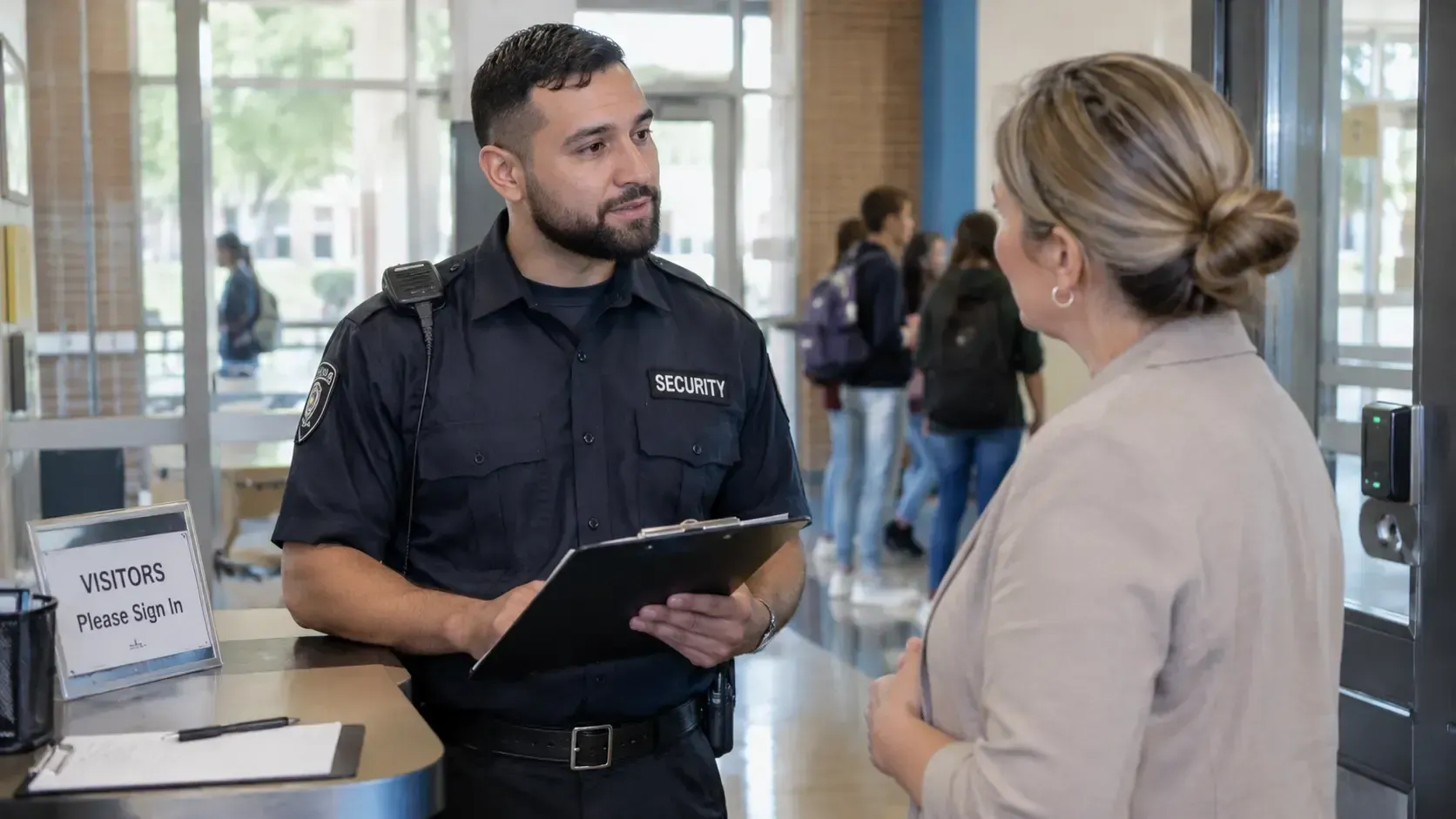
Table of Contents
- Introduction
- What Safe School Trained and Certified Means
- Why Texas School Security Training Differs From Standard Guard Work
- Who Sets the Requirements and Where to Confirm Them
- What the Credential Does Not Tell You
- How a District Verifies School Security Officer Certification
- Questions to Ask Before You Sign a Campus Contract
- Conclusion
- Learn About Our Campus Security Program
- Frequently Asked Questions
Key Takeaways
- It means school-specific training completed on top of standard Texas guard licensing.
- A guard license alone does not make someone qualified to work a campus.
- Requirements are set by the state, not by the security company, and they change.
- The credential covers training. It does not tell you about experience on a campus like yours.
- Ask for documentation per officer, not a company-level claim.
Introduction
Safe School trained and certified means a security officer has completed Texas school safety training beyond standard guard licensing, covering the specific demands of a campus security environment rather than general commercial protection. Not every licensed guard in Texas holds it.
That last point is the one districts most need to hear. A provider can be fully licensed, insured, and experienced, and still be sending officers with no school-specific preparation.
What Safe School Trained and Certified Means
It describes training layered on top of the baseline licensing every security officer in Texas already needs.
The baseline is the state guard license. That covers the fundamentals of private security work: legal authority, use of force, reporting, and the conduct standards that come with being licensed. Every officer working in Texas has to hold it.
School safety training sits above that. It addresses what changes when the protected environment is full of children, staff, parents, and visitors moving through on a daily schedule, where the officer's job involves far more routine interaction with the public than a warehouse post ever would.
Our officers are certified under Texas school safety training programs for exactly that reason. The credential is a statement about preparation for the campus environment specifically, not a general competence rating.
Why Texas School Security Training Differs From Standard Guard Work
The difference is not difficulty. It is the nature of the environment and who is in it.
What changes on a campus:
- The population is mostly minors, which affects how an officer interacts, de-escalates, and documents.
- Access is constant and legitimate. Hundreds of people enter daily and most of them belong there.
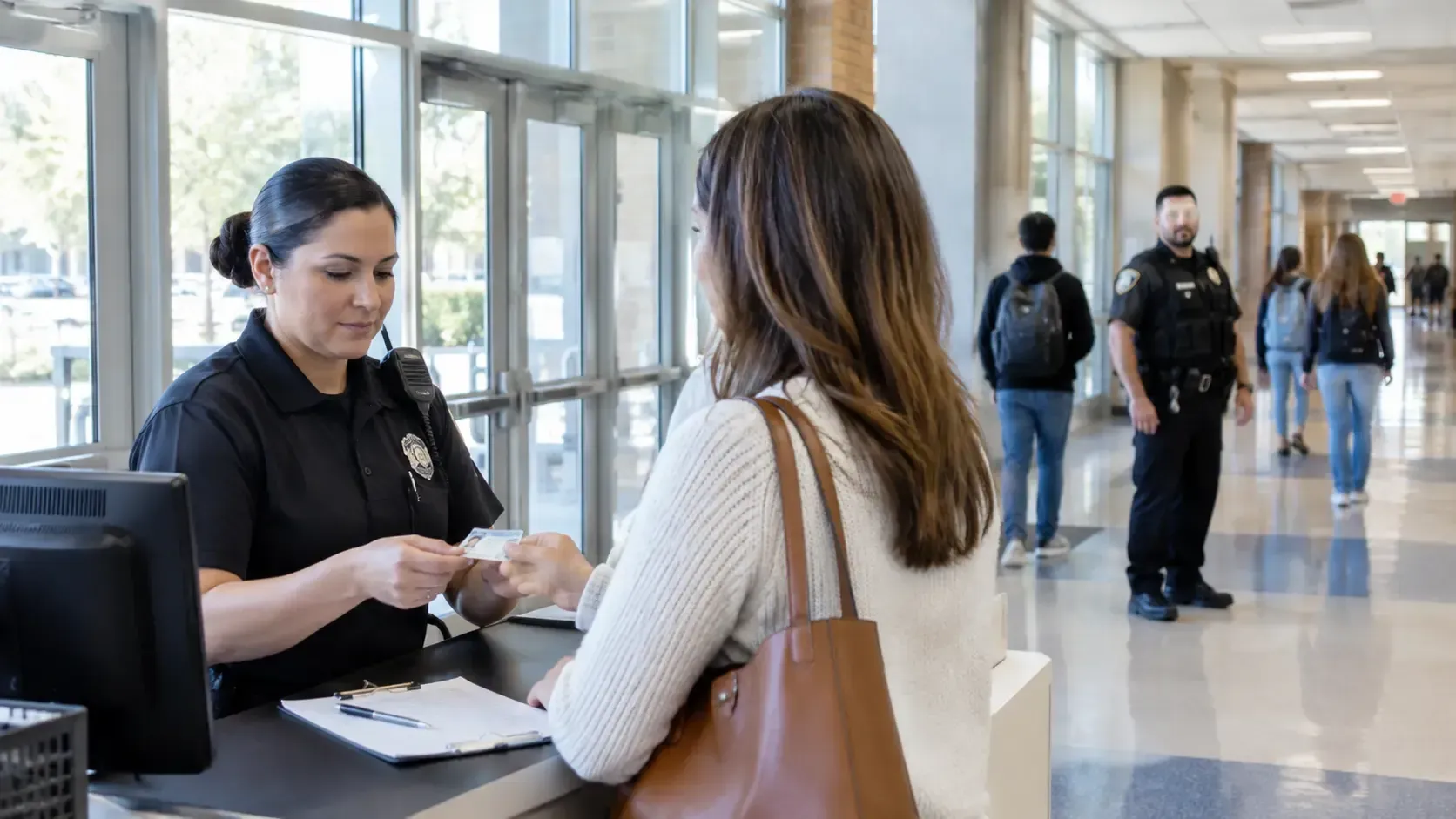
- Visitor screening is routine, not exceptional, and it has to be fast without being careless.
- The officer is part of the school community, recognized by students and staff, which is an asset and a responsibility.
- Coordination with district staff and local agencies is a regular part of the job.
- The consequences of getting it wrong are categorically different from a commercial site.
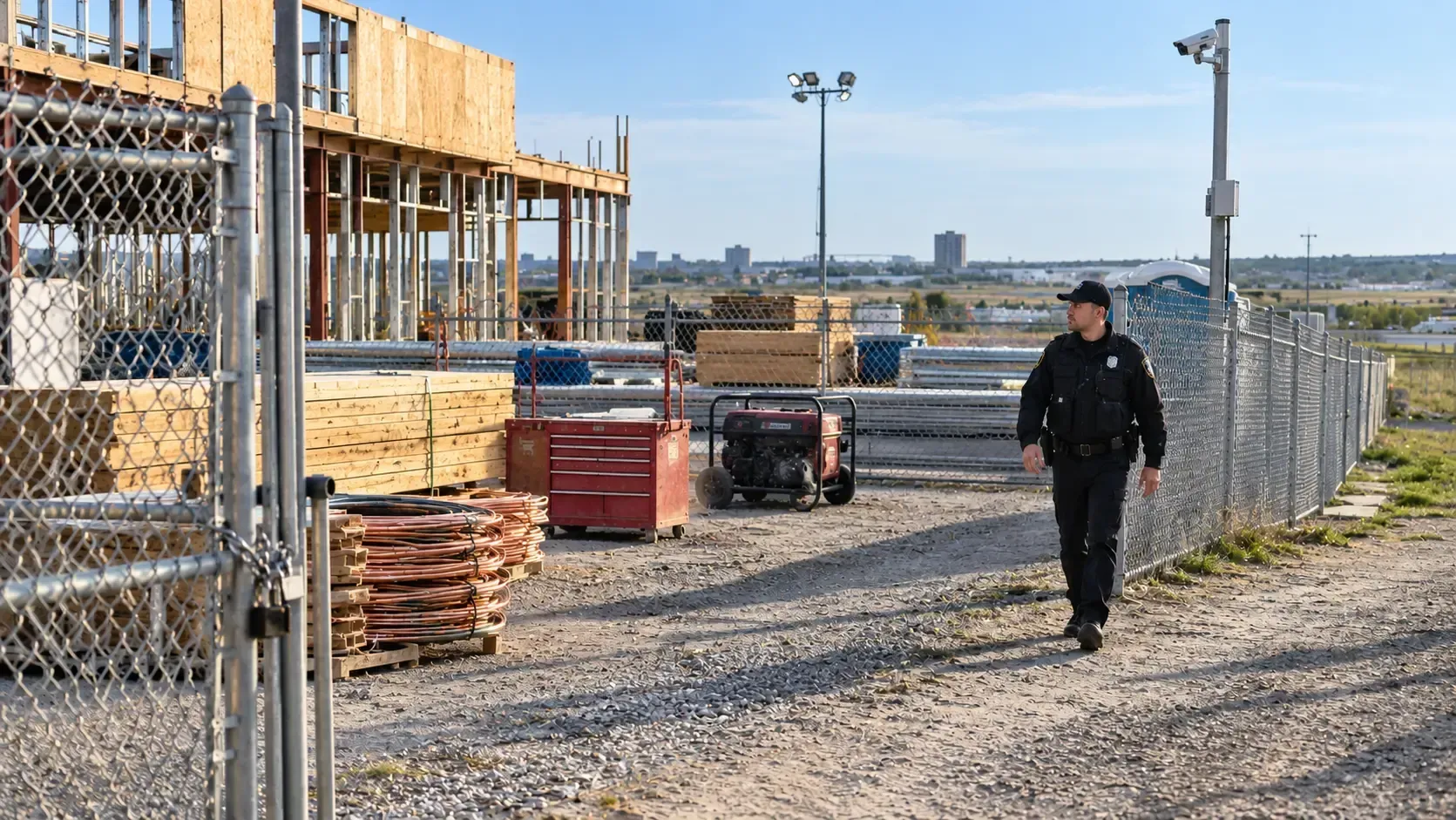
A guard who is excellent at a construction site may be poorly suited to a middle school hallway, and that is not a criticism of either. They are different jobs that happen to share a license.
Who Sets the Requirements and Where to Confirm Them
Training requirements for school security in Texas are set by the state and have changed in recent years, which is why specifics belong with the agencies rather than with a vendor.
For the current requirements, go to the source:
- The Texas Department of Public Safety Private Security Bureau administers private security licensing in Texas.
- The Texas School Safety Center is the state authority on school safety standards and training.
- The Texas Education Agency publishes district-facing requirements.
- Your district's own safety and security policies may set requirements above the state minimum.
This article deliberately publishes no training hours, course titles, statute numbers, or renewal intervals. Those change, they vary by role, and a district making a staffing decision on a figure from a blog post rather than from the state is taking a risk nobody needs to take.
What the Credential Does Not Tell You
A certification is a floor, not a full picture, and districts should treat it that way.
What it does not answer:
- How long the officer has actually worked on a campus. Training and experience are different things.
- Whether the officer is a good fit for your campus in age range, culture, and community.
- What the provider's turnover looks like, since a certified officer who leaves in two months helps nobody.
- How the company supervises officers once they are posted.
- Whether the officer is armed or unarmed, which is a separate decision with its own considerations.
That last one deserves its own conversation, and the reasons districts often run unarmed guards alongside armed officers on the same campus are covered separately.
The useful mental model: the credential tells you someone met a standard. It does not tell you whether they are the right person for your building.
How a District Verifies School Security Officer Certification
Verification is straightforward and surprisingly rarely requested.
What to ask for:
- Documentation per officer, not a company-level marketing claim
- The name of the specific training program completed
- Completion dates and renewal status, since credentials expire
- Current Texas guard license for each officer assigned
- Confirmation when officers change, because the certified officer you met may not be the one posted in March
That fifth point is where districts most often get caught. A provider demonstrates its best officers during procurement and staffs the contract with whoever is available later. Build the requirement into the contract rather than trusting the sales conversation.
A provider that cannot produce per-officer documentation on request is telling you something. One that produces it without hesitation is telling you something too.
Questions to Ask Before You Sign a Campus Contract
These separate providers quickly, and none of them are unreasonable to ask.
- Which officers will be assigned to our campus, and can we see their credentials?
- What specific school safety training did they complete, and when?
- What happens when an assigned officer is absent or leaves?
- How do you supervise officers once they are posted here?
- What is your experience with campuses our size and age range?
- How do you coordinate with our staff and with local agencies?
- What does your reporting look like, and how often do we receive it?
Ask about the substitute officer specifically. Every contract has one eventually, and the answer reveals whether the credential applies to the company's whole roster or only to the people who show up at the sales meeting.
Conclusion
The credential means school-specific training on top of a Texas guard license, and it exists because a campus is a different working environment from a commercial property. Treat it as a minimum rather than a conclusion. Confirm the current state requirements with the Texas School Safety Center and DPS rather than with a vendor, ask for per-officer documentation rather than company-level claims, and build the credential requirement into the contract so it applies to whoever is actually posted. The certification is the start of the conversation, not the end of it.
Learn About Our Campus Security Program
If your district is reviewing campus security, we will walk you through our officers' credentials, how we staff and supervise a campus, and what our reporting looks like. Flash Point Security & Protective Services is a Texas licensed company, TXL# B31055001 and TXL# C18897201, HUBzone certified, with Safe School trained and certified guards available armed or unarmed for public schools, private schools, charter schools, and college campuses. Our office is open 24/7. Call (806) 877-2615 or talk to us and ask to see the documentation.
Frequently Asked Questions
What does Safe School trained and certified mean in Texas?
It means an officer has completed school safety training beyond the standard Texas guard license, addressing the demands of a campus environment specifically. Not every licensed guard holds it, so districts should ask rather than assume.
Is a regular security guard license enough to work at a Texas school?
A guard license is the baseline every officer needs, but campus work involves daily interaction with minors, constant legitimate access, routine visitor screening, and coordination with district staff. School-specific training addresses those demands.
Who sets school security training requirements in Texas?
The state does. The Texas Department of Public Safety Private Security Bureau administers private security licensing, and the Texas School Safety Center is the authority on school safety standards. Requirements have changed in recent years, so confirm current ones directly.
How can a district verify an officer's certification?
Request documentation for each assigned officer rather than a company-level claim, including the specific training program, completion date, renewal status, and current guard license. Ask for confirmation again whenever assigned officers change.
Does certification mean an officer is experienced on campuses?
No. Certification confirms training was completed. It says nothing about how long someone has worked on a campus, whether they suit your age range and school culture, or how the provider supervises them once posted.
Why Do Some Texas School Districts Combine Armed Officers With Unarmed Security Staff on One Campus?